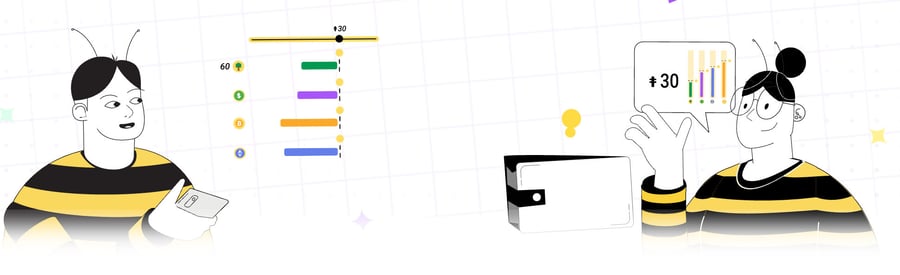

Index wallets are a new kind of payment method that have promising properties for public goods funding. In May of 2025 we’re exploring a trial implementation in Healdsburg, California. The key idea of index wallets is quite simple: when a community adopts them as a method of payment, they’re agreeing to always transact with multiple currencies when they pay each other, instead of with only a single currency. We’ll skip over the details of how the mechanism exactly works, you can read about them here. The benefit of this approach is that it allows local businesses to compete on an additional axis of customer affinity: values.
This is important because we’re already quite used to the ways in which businesses can compete on price and quality. And it’s exactly that competition that has given rise to the vast proliferation of products and services that make our lives much richer. However, we’ve also seen the ways in which markets fail. Economists call these failures externalities, essentially goods that aren’t profitable for companies to produce (like parks, infrastructure, disaster preparedness) and things that have social costs not priced into their production cost (like addiction, pollution, forced labor). This problem of public goods funding means that markets are quite limited in what they’re capable of producing.
However, with index wallets it’s possible to expand the range of goods that can be funded with market dynamics, and thereby get more funding for local public goods. Our work so far points that that being true:
These results give us some expectation that if a community adopts index wallets it will result in increased funding for public goods. Essentially, here’s how the whole index wallets experience works for a typical customer:
A person donates to a cause in Healdsburg, they get a receipt that records their donation. That receipt goes into their virtual wallet
When they go to pay, businesses have the choice of how much of a discount they want to give to people that hold the donation receipts
When businesses support a cause more it becomes cheaper for the donor to buy from them, so they’re able to specifically attract that donor as a customer. Thereby benefitting both the customer, the community, and the company.